About two weeks into quarantine, once the length of coronavirus stay-at-home measures became truly apparent, I felt a pressing desire to reconnect with old colleagues and friends.
It wasn’t just me. All at once, it felt like everyone was checking in each other people, working to gain insight into the true reality of the situation.
As unique as our professional experiences were, they were a lot of similarities.
Two things also became overwhelmingly clear:
The marketers we talked to were planning to invest more in content this year than ever before.
We had become very well positioned to help. Over the past year, we have been scaling up our graphic design and marketing capacity, as well as envisioning more project-based services.
The first-hand stories we heard from our friends were reiterated in overall industry trends.
Marketing budgets are getting cut
In response to economic uncertainty, companies are decreasing marketing budgets.
Stay-at-home measures mean events of all kinds are canceled, a massive blow to one of many companies’ primary sales and lead gen channels. While webinars are filling in some of the gaps, they aren’t enough on their own.
Content converts, particularly now
Content has always played a key role in supporting all parts of the sales funnel: increasing overall awareness, generating leads and nurturing leads through close.
But in the present coronavirus environment, content offers the unique advantage of rewarding time rather than financial investments, and it can promote a variety of expected outcomes.
Content can help you sell to your company’s future products and services.For example, let’s say you’re creating a new product to address coronavirus disruption in your industry. You can publish thought leadership content today that promotes the benefits of an ideal solution, drumming up demand in anticipation of its official launch.
Content can also help you highlight evergreen features that are always advantageous. If your product has a short deployment timeline, create content that highlights this value.
Content marketing supports the entire funnel
When we talk about content, we’re not limiting our conversation to long-form content, which is extremely influential but not the end-all-be-all. We’re referring to:
Blog posts: Great for lead generation through SEO and can be shared across every channel.
Infographics: Increase your reach; other companies love to share these.
Email marketing: As sales cycles shift (and possibly lengthen) email helps you stay top of mind.
Long-form content (eBooks, whitepapers, etc.): When hosted behind a gated form on your website or an ad, it directly generates leads. Repurpose this comprehensive content by turning it into more digestible thought leadership byline articles and blogs.
How to outsource content projects
Given the new urgency to create highly relevant and engaging branded content, we are now offering project-based services that help you grow your business without the commitment of a retainer.
We’ve always believed one of our biggest differentiators is that everyone on our team is a great writer.
Our new focus on end-to-end content marketing services means that we can help you write, design and promote content for any audience.
We’d love to talk with you about content ideas you’re mulling over, content types you’re considering or campaigns you hope to launch.
In addition to offering more project-based services, we’re also now offering a free, 30-minute consultation to our contacts. Take us up on our offer by emailing us at [email protected].
The world is changing more quickly and more dramatically than most of us have experienced in our lifetime. The coronavirus will fundamentally alter our lives. It is a lot to wrap your head around.
At the same time, most of us are antsy to identify ways we can move forward. We want to keep doing what we love: creating unique campaigns, communicating with customers, driving a business forward.
To help you move forward, we’ve identified three simple steps:
Feel: Begin at the Beginning
Before you can take action, you must understand your situation. That’s why I believe the very first thing we must do is feel. We must commit the time to wrapping our heads around the present, learning how our environments are shifting, feeling the impact COVID-19 is having on our business, our community and ourselves.
What is frustrating about this step is that, for many of us, the feeling phase may last much longer than we’d like. But because a global pandemic is a new experience for all of us, there is a lot of new information to take in, which takes time. Think of this period like you would a marketing campaign, your very first step is often to collect a lot of data. Feeling is that collection period.
Reflect: Identify the Marketing Work
Once you have taken the time required to understand your situation through feeling, you’re able to move into a period of reflection. The reflection period is all about evaluating the situation to develop a strategy for action.
As B2B marketers, our essential question is what action can I take to help sell? Unfortunately, in times like these the old-standby-style answers are not always correct anymore. Reflecting must entail identifying what actions you can take to help sell in this new environment. Consider what you need today to support a sale in the short term and the long term. You can begin by asking yourself the following questions:
How is my sales cycle changing? Is my company’s sales cycle increasing or decreasing? Does it require different types of engagement? The virus could be shifting your cycle in ways you don’t imagine. Understanding how it’s changing will help you identify what you need to support it.
To support the shifting sales cycle, what resources do I need? Identify what prospects need at this moment. Do they need help grasping the new retail environment? Maybe you can support them with a byline article. Do they need advice on creating better digital experiences? Maybe you could offer a free consultation via email.
What do people need when it comes to communication? The methods you use to communicate may need to change. If you use marketing automation, evaluate campaigns to ensure they empathetically address the situation. If you can, it may be even more effective to create tailored communication for each contact, calling some or waiting to contact others.
No matter what, you can’t go wrong by being compassionate. Asking empathetic questions and offering ways you can help will help us all identify a path forward.
Create: Develop Campaigns and Prepare for the Future
Once you have reflected on how things are changing, you’ll have the information you need to create new marketing efforts. Your sales process is likely changing. The volume and readiness of the pipeline may be altered, but your actual cycle may be decreasing or increasing as well.
If your sales cycle is decreasing, you’ll want to focus on crafting action-oriented campaigns that can help convert prospects quickly. Dive into your data to identify which campaigns were the most effective at converting and dial those up. If an email campaign promoting an ebook has worked particularly well in the past, invest in that campaign. Just make sure the messaging has been updated to more compassionately address the current situation. If an ad on LinkedIn has shown success, maybe it’s time to re-active it, again updating the content and creative in light of the coronavirus.
If your sales cycle is lengthening because of COVID-19, it may be the right time to hunker down and invest time into big projects that will set you up for future success. Events and awards may have been rescheduled but there are things you can control.
We’ve seen that long-form content is the backbone of B2B tech communications. Now is an opportune time to sit down and write. As a general rule, it’s good to have two to four long-form pieces of content (whether a whitepaper, eBook or research report) released per year. These can inspire blog posts, social media posts, ads, print collateral, webinars, articles, proactive pitching and even press releases. Overall, we see them help generate leads, illustrate your expertise and inspire new or ongoing campaigns.
Similarly, this could be a good time to invest in a time-intensive project such as a rebrand, website update, newsletter launch or persona refresh.
Don’t Stop Engaging With the World
Now is our time to rediscover the world. As we feel the impact of the coronavirus on our environments, it can be very challenging to identify a path forward. But by remembering to feel first and then reflect, we’ll be able to identify steps we can take to create our new environment.
You do not have to go through this transition alone. If you are ever looking for perspective, advice or a compassionate ear, we are here to help. We’re in this together. We have your back.
Interested in learning more about our thoughts on storytelling? We always love to chat about the topic over a cup of coffee. So don’t be shy, just reach out.
Read the Transcript
Kirsty
Goodlett: I want to start with Brittney. I am curious to hear from you. Why is
storytelling important?
Brittney Oliver:
Storytelling is so important, especially to me because I feel like it gives
everyone an opportunity to share their truth, right? We all have our own, all
our story that deserves to be shared. And I see the impact impacted needs,
especially for under represented communities, right? So if you’re a minority
business owner, having your stories old can do understory. For example, I have
a colleague whose book came out this week. When she received her book deal her
publishing house was kind of nervous because she didn’t have a large social
media following. They really want to make sure that she could sell this book
and the book, it’s called, The Memo, and it’s about women of color and
workplace. It’s a great topic but it’s always hard to pitch opportunities or
stories around people of color, right? It really is. So her publisher’s
feedback really meant some of these are hurting. So I wrote about her for Fast
Company. Once that article went live, her publisher gave her a date for her
book to be released. That’s how much a story being published can make an impact
to someone’s life.
Kirsty
Goodlett: So I want to jump off of that point and pass it over to Nicole.
Nicole, I’m curious to hear from you how you see storytelling being important
to businesses. Because Brittney’s example is such a great example of like
someone who’s clearly making money from writing, but we also have sometimes a
harder time telling stories about companies. So why is story telling important
for businesses?
Nicole
Delger: Storytelling gives people to talk about your company and you know,
share pride in the things they find. There are so many different things that we
can invest in or bring into our lives and it’s harder to be discerning some
times as a consumer. So when I think about storytelling, I always put my
consumer hat on. What are the brands that I like, what are the stories that I
rally around? How are they interesting? And I think it’s important for
companies down on what their story is so that people will talk about them. I
love your example, Brittney. I just saw another one in the news yesterday in
the Shelbyville Times about Uncle Nearest Premium Whiskey. Have you seen this
one? I thought that was so beautiful and it is inspired by a slave that taught
Jack Daniels how to distill whiskey. And they are saying, this is the Godfather
ofTennessee whiskey. And I think that is really exciting for people who are
entrepreneurial, who are wanting to make something meaningful, wanting to
create a brand that’s meaningful to go out and find these stories and be
inspired by these stories to create something new. So I think it’s made from an
entrepreneurial perspective. And so typing into your own story or the story
that you want to tell it from a creative business.
Kirsty
Goodlett: So, what do you do then if you don’t have that? So, like how does
storytelling money vary then between business to business or business to
consumer? And what do you do from a toolkit perspective to think differently
about those different types of companies or services?
Nicole
Delger: Yeah, I mean not to immediately pitch hiring someone. I think it’s not
necessarily about hiring communications. company to tell your story. It’s about
having conversations with people and starting to look outside yourself, get
outside your business, get perspective on what might be interesting. For a
story, you might not recognize these really interesting people. I remember
Catherine talking about that person that you work with…
Kirsty
Goodlett: Yeah, that’s great. That’s a great leeway. Right. Catherine, can you
speak to this example or maybe some others that you’ve seen when it comes to
finding ways to tell stories about businesses?
Catherine
Seeds: Sure. I think with our clients, we work with B2B technology companies,
so we’re always looking into why we’d be interested in stories about the
products and the services that our clients are providing. And that’s what their
marketing is for, of course, but we want to dig deeper. All of us here are
storytellers in some way. So you want to take deeper. And what I love to do,
what we love doing for our clients is figuring out what has inspired the
executive and founder of the company to start that company. In my experience, a
lot of CEOs and founders don’t give themselves enough credit for the
inspiration for their own companies. One of our clients, we sat down with the
CEO and founder to get the backstory. He is from Germany. He went through his
story about how when he was 16, he worked in the salt mines and how he
remembered the sweat coming down his face, working in the mines, the salt
mines. He remembered how his superiors would check on him to make sure that he
was okay. And he remembered that and he carried that with him. When he started
his own company he decided he was always going to treat everyone the same, no
matter what level and that was because of his background in the salt mines. So
we put together a pitch to the media and we’ve got some interest in that, which
is great because CEO stories are always interesting to tell. You want to tell
those stories about the products and services and how they’re affecting end
users but we want to go further, we want to dig deeper into telling more
interesting, more human inspired stories for our clients.
Kirsty Goodlett:
Yeah. So that leads me to a good question for Kelley. When we were preparing
for this panel we were talking about, how do you identify interesting stories?
Kelley you had some interesting things to say about that. You remarked that
when you consider stories, you say, is this interesting to me? So can you speak
to that a little bit?
Kelley
Griggs: So that’s sort of the question I would ask. I would ask, hey, we are
seeking stories about startups. We happen to be seeking stories about startups
in the south. That’s like a pretty specific topic. And one of the reasons why
we were doing that was because we were looking for the types of things that
other people might relate to, both in business and in life. So, I think that
one really, really important part of telling your story is just asking
yourself, is this an interesting and would it be interesting to somebody else
if they were to read it? And what is really the, the hook of the story? If you
think about the hook of your story or you know, the reason why you love it so
much and emphasize that hook, I think that others are more likely to grab on to
whatever you’re talking about. They have to work on, you have to work on that
hook. So that’s really, you know, that’s really subjective. Everybody would
think a little bit differently and your story is not for everyone. So, I do
think though, as a journalist that something I would always think about if someone
was pitching me a story is, you know, is this interesting to my audience? And
that went back to my topic about startups in the south.
Kirsty
Goodlett: That’s a good point. So as a journalist who chooses which stories to
write about, can you speak to tips about someone may pitch you to get written
about.
Kelley
Griggs: Sure and I think, I think Brittney and I will have different
perspectives because when you’re, when you’re pitching to me, I have my topic,
I have startups in the south and that’s what I’m really looking for. And those
stories are very, very interesting to me because I’m telling you a human story,
I’m telling the story that a lot of people around here might relate to. I’m
telling a very different story than stories in Silicon Valley. So my stories
might have more grittiness to them. They might have more culture in the way
that we might understand it in our area of the country. They might not be so
much about scale and getting investment from, you know, getting millions and
millions of dollars. They’re not going to be the story of Silicon Valley.
They’re gonna be the story of what I’m used to. But, but my blog is about a
beginner, you know, a founder who’s just started a company, who is in the area
of maybe Nashville or Atlanta or Raleigh or global or Memphis. And I might be
your first person that you’ve reached out to. I think I’m way more likely to be
the first or second or third person you reach out to and say, Hey, I think I’m
writing to pitch somebody a story. So, people are out there starting
businesses. I’d love to hear from you.
Kirsty
Goodlett: And what do they say to you?
Kelley
Griggs: They usually say something like, Hey, uh, I just started a company.
This is what it’s called. Here’s the website. I think my story’s really
interesting. I wouldlove to talk to you about it. And that’s how we start a
conversation. You know, there are little things, like details like time and
getting our schedules right. Then usually I am willing to speak with most
people as long as it’s in my topic area; most people who reach out to me as
long as they’re legitimate.
Kirsty
Goodlett: Brittney, would you say that that’s true for you? Like what does it
take for you to get pitched and to write about it?
Brittney
Oliver: So I just want to let you know some of the outlets that I contribute
to. So I work where I contribute to the career money, entrepreneurial segments
for Fast Company, Essence, Nashville lifestyles, and other one line
publications. So I have a national reach, so I’m not limited to a region. But
to what you’re speaking, you need to pitch it within someone’s vertical, right?
So if your topic is on business or entrepreneurial endeavors or innovation at
your company, you want to target that specific staff writer or contributor for
that particular vertical in your immunity. You want to target the beauty
writer, right? So those are some of the tips that you would need when you’re
pitching yourself. Also, people don’t realize that you’re so much more than
your bio. You’re so much more than your bio. Really dig deep to different
angles to pitch yourself. You’ll never know when your experience, your life
experience will intrigue somebody. So for example, if you run a company, a
cheese company, right? But you have this really interesting background and how
you grew up and somehow it impacted the way you run your business. That’s
something that made it yourself. Is your company 50% minority? That’s something
that’s interesting because right now DNI topics are important and trending. So
also think about trending topics in your industry as well. What’s trending?
What is some leading data around your industry that you could leave with when
you’re pitching publicists? I mean, when you’re pitching publications, those
are things that are interesting. Lead with numbers, the data doesn’t lie. It
really backs up your story.
Kirsty
Goodlett: Yeah. So that leads to a great comment I think from Catherine. So,
Catherine, we have done a number of stories where we use data as a way to pitch
B2B, which sometimes has difficulty finding a human element. So as Brittney
said, that could be another way in. So I’d love for you to share some more
insight about how data can be used to help provide pickup.
Catherine
Seeds: Right. The clients that we’re working with, we’re always looking for data,
whether that’s data with your own customer base or if you’ve gone out and done
some consumer surveys or research studies. You know, folks like Brittney and
other trade or business media are gonna be interested in that as well as a good
customer story. We have an interesting use case about how we were able to use
data very successfully in Kirsty you can keep me honest on this one since you
were on the team. We have a company in Austin, they’re an ad tech company. We
worked in collaboration with them to put together a consumer study around
Amazon Prime Day. We were looking at things like, you know, from a consumer
standpoint, you know, what are they shopping for during Amazon Prime Day? Have
they shopped before? What are they going to be shopping for this year? So we
kind of looked at that. It was focused all on Amazon Prime Day. We got really
lucky because we have really great data. We also had really great luck from a
timing standpoint because the day that we released our was the day that Amazon
had announced the date of their official Prime Day. So we have all this amazing
data out there. And what we found in that data was that Amazon Prime Day is
like the next big holiday shopping event, like back-to-school or any other sort
of micro-holiday. So, we have some really great data, but we also had really
great timing and our team had been pitching top tier and trade media, up until
that day. So the stars aligned in PR world that doesn’t happen very often. And
so we’re really glad that it did and we were able to get some awesome media
coverage: Bloomberg, Market Watch, Ad Week, and all the trade and ad tech
trades. Am I missing anything, Kirsty?
Kirsty
Goodlett: No, that’s good.
Catherine
Seeds: Okay good. So from a success standpoint, it was a good day for us at
Ketner Group when that happened and the client, obviously was very happy. And I
know that the team is still being able to use some of that data moving forward.
Kirsty
Goodlett: Yeah. The other thing that I’ll add to that, which is interesting
from a story perspective is the one thing that was like the hook for the media
was Amazon Prime Day is the new back to school holiday, right? Like that’s an
interesting hook. But additionally Adlucent is an ad tech company, so we were
able to say, okay, it’s the new holiday and what are you doing about it? Right?
Like, are you making sure that your advertising is prepared in order to meet
this holiday? So that’s another example of how the data is great for getting
and securing that trade or that top tier pickup. But then from a business
perspective, you want to consider, okay, the data’s going to get me in and then
what do I do once I’m in, right? What’s my story after that? So in terms of
that logistics stuff, Nicole, I’m curious to hear from you regarding what
things you need to consider about stories that you might not expect. One thing
with you in particular, and knowing your background, how do you take a story
and integrate a brand identity. How do you take that and translate it into
different platforms.
Nicole
Delger: Yeah, so I do marketing and communications, but my main client right
now is a pencil factory, a hundred year old pencil factory. And I’m now all
about pencils. I have a bunch in my bag if you want one from Musgrave Pencil
factory there in Shelbyville. So I mentioned that because if you don’t know
about the pencil industry, they’re notoriously secretive. So when they came on
and wanted to rebrand, they were a hundred year old company and nobody knew
anything about them. So it was of like, oh my gosh, I have this like chest of
things to just uncover. And I think the thing that’s surprising is they have
such a great story. They have so many vintage things. I didn’t have to tell it
all at once. It didn’t have to just go out there with this really long piece of
coverage. I can find a vintage advertising pencil and take an awesome photo of
it and find a business that it was advertising 50 years ago and tag them and
tell a little story. So especially if you have a company where you feel like
there’s so much to tell and share, it’s okay in your storytelling to tell
little nuggets, and little Easter eggs along the way and know that over time
you’re building that brand identity, you’re building that larger narrative. It
doesn’t all have to happen at once. And starting to know when you’re talking to
people, what details you can leave out just as much as what details should you
put in for whatever that exchange might be. And so I think you can find one
story on Instagram through a visual platform. Or another story if you’re doing
the longer piece of media, what you might talk about regarding your CEO, and
you don’t have to get into that, all that other stuff. And so really thinking,
matching the media, matching the story with it.
Nicole
Delger: So something else that we were discussing earlier that was something
that came up that we wouldn’t expect so much was that Brittney talked about
thinking about SEO and what stories people want to hear. So can you speak to
your experience, Brittney, regarding from the publication side. What are
publications thinking about that would be surprising to companies?
Brittney
Oliver: So everything is about clicks, right? A lot of people blame Buzzfeed
for the way the media is, but it’s true. It’s about clicks. Let’s, it’s
click-baity, right? How are we going to drive traffic? Everyone wants that
traffic. And so when you’re thinking about telling your story, think about
things that are trending, right? For example, I feel like this is the month of
Serena Williams. And the reason why I say that is, one, it’s tennis month,
right? Today’s the US Open. So anything tennis relating related is going to
pick up some traffic, right? Then she’s someone who advocates equal pay. And
that’s been a big topic this month, women’s equality day is today actually. So
she is someone who’s trending, circulating. If you have a story idea in those
little pockets you’re going to drive SEO. So tell that story, if it is sports,
or you know, Serena Williams related, you can tie her in somehow. Any of those
things. Think about those holidays that are coming up, the holidays that you
were talking about. Those things attract SEO. So when you’re pitching, really
think about that because that’s what media companies are looking for.
Kirsty
Goodlett: The other thing that I found surprising when we were meeting earlier
was that companies aren’t always ready to tell their stories. So, Nicole and
Brittney, you were both talking about what to do as you keep telling stories.
Kelly, I’m curious to hear from you, when do you know that you have a story to
tell in the first place?
Kelley
Griggs: So some of you might be wondering like, Hey, I am just getting started.
I don’t have any customers yet or I don’t have, you know, my business is less
than a year old or the things that I want to share with the world just
happened. And obviously it depends on your personal preferences and
circumstances, but, I will say you wouldn’t believe how many pitches I get that
are pre-revenue, like barely have a put together a pitch deck, they just want
to reach out to me and like get on my radar. I don’t want to give advice
because I don’t know if bloggers find that annoying or if they if they like it.
I don’t really know. I only know how I feel and I’m just naturally curious and
I like stories. So if you were to send me the pitch deck, even if I were to to
turn you away. Or even if I said like, hey, this isn’t ready yet or I would
really like to see, you know, some other things. Come back to me again. You
should still send them to me because odds are I’m interested because I’m
interested in startups because I truly like starting businesses and I like
talking about it and I thoroughly enjoy that world.
Kirsty
Goodlett: What do you put in the pitch deck?
Kelley
Griggs: So if you have a deck…something that should be included in the deck
is your information, what your business is, where your website is, what it
does, you know, the 32nd elevator pitch of who your competitors are. What is
your revenue plan, if you haven’t made money yet, ..if you do have customers, I
would like to know that you have customers. But remember, you have to be
careful with what you share with me because I am a writer and I will want to
write about things. So if there’s something that you just don’t want to share,
you don’t have to share it even if I ask for it. So just always remember,
remember that.
Kirsty
Goodlett: Is it a PowerPoint typically or a pdf?
Kelley
Griggs: It’s usually a pdf. Sometimes it’s like on a different website, but
sometimes it’s just an attached pdf like in keynote or it could be PowerPoint.
I get a wide range. Some of them are very well polished, they look like they’ve
been in front of investors, others are like done with them in PowerPoint. And I
think all this is to say that some of my favorite startup stories in Nashville
are people that you may have heard of now like ** for example, like they have
raised millions of dollars. Now they’re an instrument that, uh, you can put
your phone into and you can play any instrument using their device. Some fans
in Nashville have used the ** on stage and they’ve now gotten to the point
where they’re probably written in big publications more often than I would
write about them. But you know, when they just started out in Nashville, like
somebody had to find them. So I wrote about them a long, long, long time ago.
Another Nashville startup, there’s one that does lawn care. It’s almost like an
Uber for lawn care. Um, they started very young. When they started out, they
pitched me with like, I think just like maybe a one sheeter or a pitch deck or
something very light. And I had to sort of go out and keep following them and
dig for those stories. So I don’t know all this to say that I really like to
encourage people to just get started. I’m probably a little bit more
approachable. Like I don’t think that other media should or will give you
feedback like I do. And I try to keep it non-biased and according to my own
rules of my blog. But I will say that I would love to hear your stories in
general.
Kirsty
Goodlett: So now we’ve heard about about what’s happening now. Catherine, I’m
curious about your perspective regarding how storytelling is evolving. Like
what do you see in terms of new ways that people are telling stories like
podcasts or social media? And also what are you seeing staying the same?
Catherine
Seeds: So we are spending a lot more time looking at podcasts. I don’t know if
there’s any podcasters in the audience but we are starting to put you guys on
our media list because our clients are asking for that. It’s another new
interesting medium to, for our clients to tell their stories and also to share
on social media platforms inside. So we are really taking a close look at
podcasting. They’re more and more popping up every day especially in Austin. There’s,
there’s a ton of podcasts, a startup focused podcasts in Austin. Social media:
social media has always been there for us, but we’re really, um, trying to
build better relationships with the media that we work with on social media.
And not in an annoying way, but you know, if they are tweeting about something,
you know, or if they wrote an article about something interesting that had
nothing to do with any of our clients we might want to say, oh, that’s really
interesting or share that. It always goes back to developing really great
relationships with the media that you’re working with. Social media is a really
great, great way of doing that. And so we’ve been able to really kind of deepen
our relationships with the key media and also we get, you know, first insights
into people that are moving around. So someone that may be at Fast Company and
has moved on to Bloomberg and this and that, so we’re able to keep tabs of
what’s going on in there to help us tell better stories and tell the stories of
the right people.
Brittney
Oliver: I just want to say that’s, that’s the most organic way to build a
relationship with someone who is a journalist, what you’re doing. And for me
personally, I don’t like pitch decks or pdf. If you can’t send like a quick one
paragraph blurb, then it’s probably a no go for me. But the most organic
relationships that I’ve built are the people who usually get features from me.
Like if you come to support me at an event and you need to spend a moment of
time with me afterward. And you tell me something interesting. I keep that in
mind. I’m also always listening to podcasts. If I hear someone on there and I
think, oh, that was really unique. I’m going to reach out to them for an
opportunity. So journalists are looking everywhere for the next story. So if
you don’t have, you know, an Essence or a Fast Company, that is fine. That
blog, that news letter, that podcast is another way that someone can be seen.
Catherine
Seeds: I was just going to say one more thing. As far as things staying the
same and we kind of touched on it a little bit, but building the relationships
with the media is so important, no matter how you’re communicating. You know,
with you guys building those relationships and not, you know, just coming to
them when, when you need something. We found that we have better luck and I’m
sure you guys, you all are communicators, you find better luck in getting
things that you would want for your client or for yourself if you have that
relationship. It’s a two way street. So I really encourage you all to do what
you can to develop those relationships, whether it’s again, you know, talking
with them on social media, going to the events that they’re going to. We go to
a lot of trade shows for our clients and it’s a really great way to get face to
face. But again, all of this ties back to like, how can I help our clients or
my company tell a better story? And it really is ties back to developing really
good relationships.
Kirsty
Goodlett: Awesome. Thank you. I’m going to switch gears here. and pick up on
the Austin Nashville theme for the event. So, Kelly, I’m curious to hear from
you how you see storytelling supporting the growth of Nashville.
Kelley
Griggs: That’s a great question. Look, we’ve been growing as a city far before
I came to Nashville. So I feel as a writer, like I am an observer and I’m only
telling the part of the story that I know how to tell. The part that I see in
the world. Back when I moved to Nashville in 2012, that happened to coincide
with the tech scene starting to grow really rapidly. Some of that was due to
local and regional investments. Some of that was due to accelerators starting
up. So that was due to coming off the flood and the last recession. People were
getting really comfortable and some of it was due to the success and the
stories that people heard from other places in the U.S. So, you know, when I
think about growth and where, where we go from here, I think there’s so much
opportunity. Part of the thing I get excited about when I’m telling a story is
that we are all part of it. If you’re here in Nashville right now. And I will
add that location really shouldn’t matter if you’re on the Internet, that
you’re in the conversation, so that kind of goes against like my, my regional
focus. But, in reality, you know, we all exist no matter where we are. And
since, you know, people are more interested in things like remote work and
longer maternity and paternity leaves and different people are interested in
different benefits that might apply. And that is really exciting for people who
live in places like Nashville. I think that is a very important emerging story.
So for us here, you know, starting a business, I don’t know, to me it’s never
been more exciting. But I would say that every year, since I’ve lived here, you
know, since I moved here in 2012. And I think the most important thing that I
see is that we are in charge of our own story. And that doesn’t have to be the
same as other places. It can be really our own brand and it can come from our
own place and it can come from our own history and our own experiences. And it
should be that way because we have our own identity.
Kirsty
Goodlett: Yeah. So that leads to a nice pass off to Catherine from Austin. So,
Catherine, I’m curious to hear from you how you’ve seen storytelling support
the growth of Austin.
Catherine
Seeds: Well, I mean, I’m sure you all know it’s a huge tech hub, much like
Nashville is and is becoming. And it’s been that way since the 80s. I mean, um,
Dell computers started there, Twitter, got its start at South by Southwest. I
mean there’s a ton of really cool startup stories in Austin. And I think from a
storytelling standpoint, if like when we’re talking to companies and pitching
our clients, especially those that are based in Austin, that comes with a
certain cache. Oh, I’m from Austin! Or that comes from Austin! Oh, that’s cool.
Oh, I love Austin. Yeah, it’s the same thing with Nashville and we’re so glad
to be here because I feel like there is a lot of similarities between the two
cities. Because, again, you say, Oh, I’m from Nashville, I’m starting a company
in Nashville.. Oh, that’s cool. I’ve heard great things about Nashville. You
know, it doesn’t really change so much of like how we tell the story, but I
feel like it does kind of give us a differentiation when we’re pitching for
business because a lot of our clients that we’re working with are either global
or across the U.S. and so for them having someone in a tech hub like Austin or
Nashville is important to them.
Kirsty
Goodlett: Great. So the other thing that is true about this panel is that we’re
all women. So, Nicole, I would love to hear from you regarding why it’s
important for us to discuss diversity and inclusion as it pertains to the
future of storytelling.
Nicole
Delger: Absolutely. You know, stories are how we make sense of the world. It’s
how we cooperate. It’s how we work together. I don’t know if has anybody read
the book Sapiens, it is a fantastic book. And you know, his whole thesis is
essentially, you know, we’re an animal and the reason that we were able to be
the dominant animal is our ability to work together, to cooperate and to tell
stories. So when we talk about the importance of inclusivity and whether it’s
women or people of color or people who have been disenfranchised, when they
don’t have the ability to tell the story and to shape the narrative then they
don’t have the opportunity to create the world that we all want to live in that
is different than the narrative that we’ve been told for hundreds of years,
thousands of years, by whoever was in charge at that given time. I think that’s
really interesting. We have to make sure that a lot of voices get to shape and
get to tell their stories so that we can create a better world for everybody.
Kirsty
Goodlett: So then Brittney, I’m curious to hear your response to that same
question. Where do you see diversity inclusion being important to the future of
storytelling?
Brittney
Oliver: It’s important because it’s impactful. Like I said earlier, it really
makes a difference for a minority owned businesses when your story is told. And
so I want to give a, a quick story about just my experience moving back to
Nashville. So I lived in New York for seven years and diversity and inclusion
is such a big topic in New York. It’s something that everyone’s talking about.
All the companies are really trying to make changes. But when I came back home
a year ago, I noticed that conversation wasn’t happening here. It wasn’t loud,
people weren’t really making noise. And when I looked at the publications here,
I didn’t see a lot of black owned businesses featured in the publications. I
kind of made it a priority to be that vessel for those black owned businesses
and for minority businesses. So for example, Ashley is here today,. She has a
website called Urbanite and she really highlights a lot of the businesses that
are left out in those major publications here in Nashville. And because I’m a
subscriber to her newsletter, I came across Nicole, who is the owner of
Clarity, which is a candle shop. And I loved her story. I pitched her to
Nashville Lifestyles and she’s in the current business, women in business
issue. That’s something that was important to me to see more diversity in that
magazine and to see more diversity just throughout Nashville, but it’s so it
will change her business being featured in that and it will change other
people’s businesses. And so diversity inclusion, really being able to tell
those stories is impactful. There’s a Nashville mother and daughter team, Mixtroz,
well, they just moved but I featured them in Essence. I featured them in
Dssence and they were really close to hitting the million dollar mark raising
money. After essence, they hit that mark the next week. You know, so you can
leverage those things. That’s how much your story being featured being featured
in major publications as a minority can help. And so when people say no, it
doesn’t matter if you have press or not, it does. It really makes an impact.
Nicole
Delger: I love what you’re doing. The voice you’re bringing because we talk
about how Nashville is booming and we want to make sure that it’s booming for
everybody, that everybody is, you know, because there’s so much industry coming
in here, like tech, and I love that you’re telling those stories and you have
that forum because it’s so critical at this key time for Nashville, for
everybody to get that lift.
Brittney
Oliver: Yeah. Nationwide, nationwide, the numbers don’t lie. You know, we’re an
all women panel, but in business and major companies, you don’t see women on
the C-suite like that, right? So telling those stories are important. It really
can change the game. It starts to challenge what’s happening in corporate
America, right? And it starts to make people see different things about what they’re
doing. And so the numbers don’t lie. You want to be impactful. We want to make
change in our culture, in our communities. So definitely diversity and
inclusion is a big deal.
On August 27, after seven months of preparation, we officially launched Ketner Group Nashville. I don’t mean this as hyperbole: our launch week was one of the best weeks of my life. It started with a bang and ended with magic. To really soak up all the goodness, I think it’s only fair to offer you up the day-to-day highlights and takeaways.
Storytelling Truths: Monday, August 26
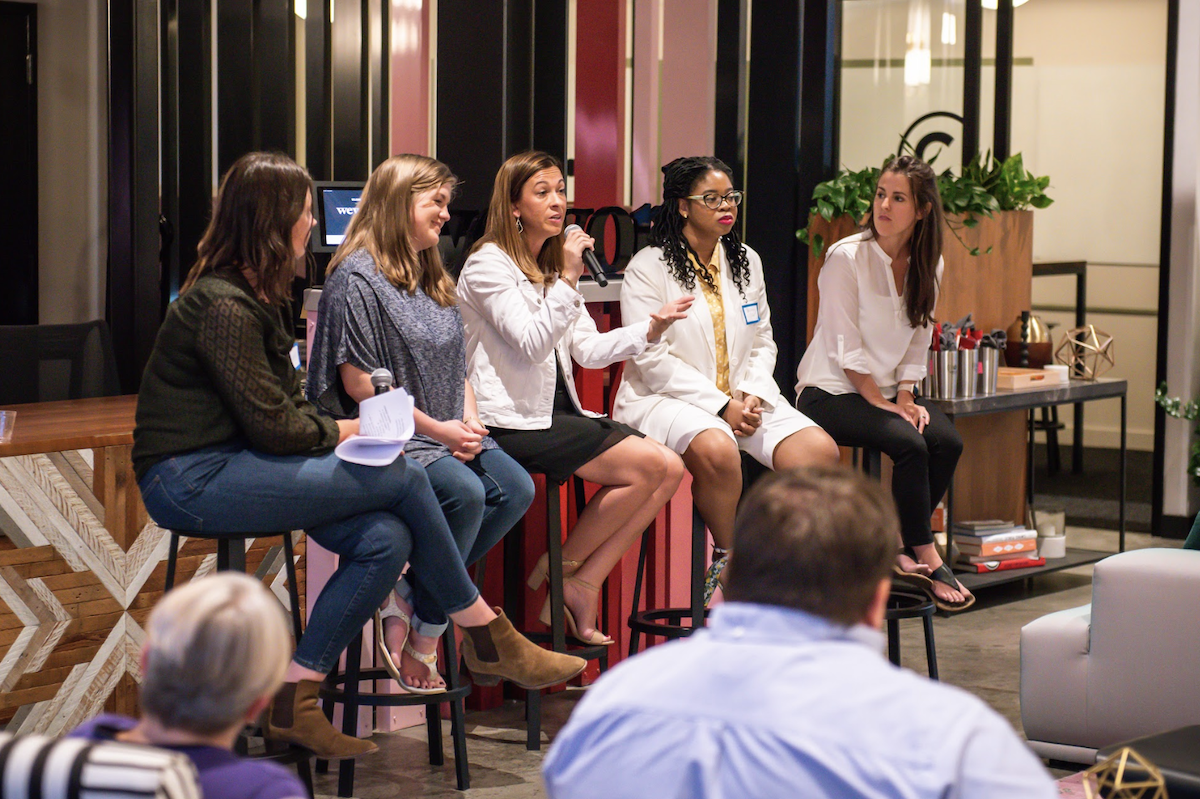
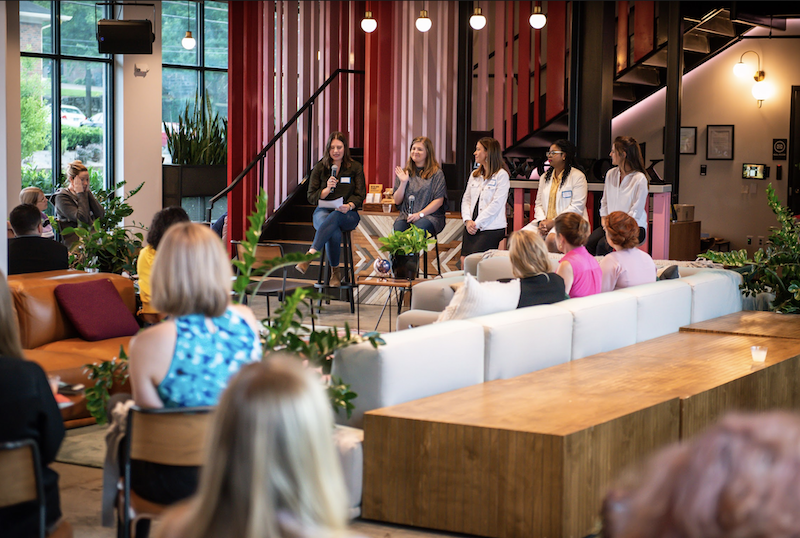
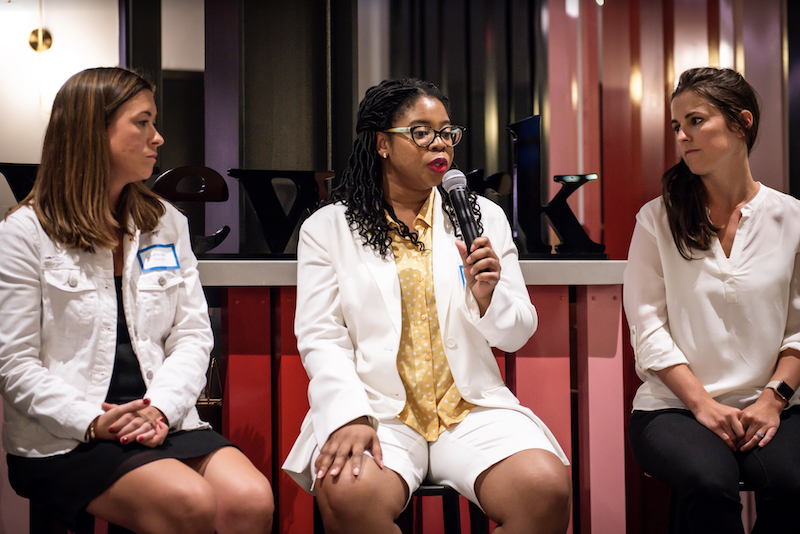
In celebration of our launch, we hosted an all-female panel about storytelling, which featured some of my favorite women in Nashville (and one from Austin): Nicole Delger, Kelley Griggs, Brittney Oliver and Catherine Seeds. The panel was a fantastic mix of real, actionable insights for generating press, such as signing up for HARO and Qwoted, which send subscribers regular emails requesting sources for stories journalists are working.
But additionally, the discussion dug into more inspirational topics such as the ability storytelling has to generate unique opportunities. Brittney shared an example of a tech startup she covered who procured the funding they needed after earning a great article in an important magazine.
Thank you @KetnerGroupPR & @kirstygoodlett for tonight's panel on storytelling. There were lots of takeaways tonight. One of my favs was from @Britt_S_O "Storytelling gives everyone the opportunity to share their truth." #KetnerStorytelling
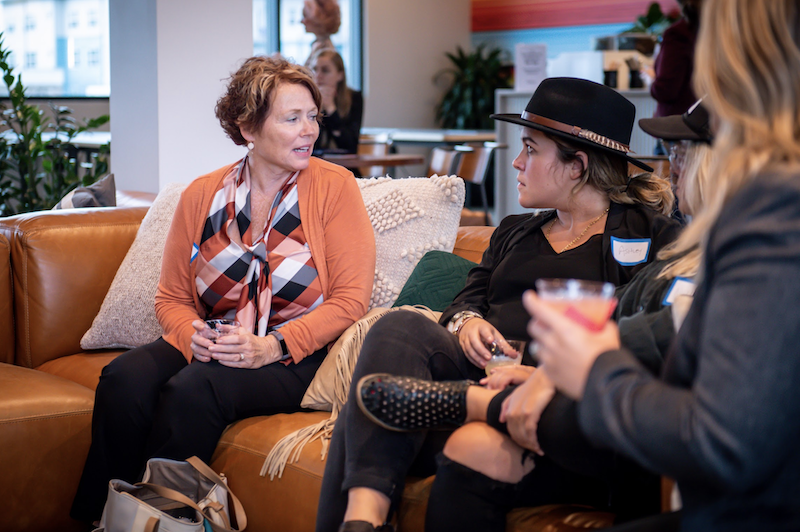
On a personal level, it was emotional to see so many people from Nashville – who have and who will make such an impact on our success – show up to celebrate our launch with us!
With Catherine Seeds in town for the week, we headed off to the 36|86 VIP Launch Party in a fun speakeasy in Printer’s Alley, Dirty Little Secret, to celebrate over a glass of champagne.
Winning Press and Earning Influence: Wednesday, August 28
Wednesday morning, we kicked off 36|86 with a panel featuring Ben Kurland, Lisa Roberts and me. Seeing a packed room excited to learn how to win press and influence customers thrilled me. The engaged audience asked some great questions, including, what exactly is “the wire?”
Lisa and Ben dazzled with their insights about the best ways for entrepreneurs to highlight their stories to the media. Lisa recommended data as a great approach, a soundbite highlighted in a Nashville Entrepreneur Center blog: “Looking to win press? ‘There’s nothing that will get reporters’ attention faster than compelling data that tells a story.’ This will build trust and credibility.”
Then we wrapped up the day getting a chance to speak with Clark Buckner for the 36|86 podcast. So, stay tuned for that great content!
Finally, on the last day of 36|86, Catherine and I attended separate sessions to learn as much as we possibly could from the experts in attendance. The vulnerability and openness of the speakers blew me away.
A number of female venture capitalists (VCs) spoke about the challenges for women founders and women funders. Kerry Rupp of True Wealth Ventures and Jessica Peltz Zatulove of MDC Ventures, among others, highlighted this theme in their sessions. In fact, did you know that only 15% of venture capital funding is allocated to female founders, despite female founders outperforming their male counterparts (more stats in Forbes)?
But my favorite session was “How I f*cked up and you can too!” The panelists spoke candidly about the challenges and joys of entrepreneurship. Marcus Cobb of Jammber brought me to tears as he emphasized that we are all made of creative magic.
And with that, Catherine and I headed off to experience Nashville’s House of Cards and to celebrate the week with a little bit of magic ourselves.
Update: since publishing this blog post, Adlucent has garnered additional pickup in seven more publications (plus syndicated publications) including AdWeek, for a total of 40 placements. Adlucent was also awarded a MarCom Award for the eBook.
A couple of weeks ago, Amazon announced that its annual Prime Day would occur July 15 and 16 this year. Also occurring a couple of weeks ago, on the very same day as that announcement, we were psyched to have planned the release for our client Adlucent’s consumer survey and corresponding whitepaper, “Getting the Most out of Amazon Prime Day 2019.”
The coordination of the survey and the resulting pick up is a super example of a well-positioned release and great team work. Since the release, the survey data has been incorporated into 10 articles (two of those top tiers and those not including syndicated publications), has lead to a handful of specific media inquiries and resulted in two industry analyst appointments. Not only has Adlucent given itself a name in Amazon Prime Day marketing. Even better, it has positioned Adlucent as an expert in the space of digital marketing.
What This Pickup Says About Our Client Relationship
As excited I am as a media person to have garnered this attention for our client, I’m even more excited about the way we worked with Adlucent to make this happen. From the very beginning, this report was a great collaboration. We helped develop the survey questions with Adlucent, wrote an outline from the results, passed the content over to Adlucent for final development and then planned together the most interesting story lines to pitch.
In preparation for our go-live date, we prepared and distributed a media advisory, while Adlucent prepared for advertising and internal promo on their side. Since then, Adlucent has featured the report in their newsletter, followed up with leads who downloaded the survey, and promoted the content further via social media, while we’ve been active coordinating interviews and responding to follow up requests.
This week, we’ll be keeping our eyes on developing Amazon news to see how we can continue to pitch Adlucent as an expert source in this category.
How This Prime Day Survey Promoted Adlucent As A Thought Leader
Outside of our collaboration, I want to also highlight the uniqueness of this report. The Adlucent consumer survey not only dug into what’s happening with Prime Day onAmazon. It also dug into what consumers are doing when it comes to shopping off Amazon around Prime Day.
Adlucent found that 72% of consumers will look beyond Amazon to comparison shop on Prime Day in its survey of 1,000 consumers ages 18-64. This stat reflects the fact that Prime Day has become a sort of holiday of the back-to-school shopping season. Further, of the survey respondents who planned to go back-to-school shopping, 55% plan to do so on Amazon.
Adlucent used these results to inspire a list of recommendations for how brands can take advantage of the shopping phenomenon. Recommendations included creating lightning deals, promoting shopping on social and preparing your product listings for the extra visitors. But I’ll let you read on in the report itself to get that full list of advice.
Where We’ve Received Prime Day Pickup
Last but not least, this wouldn’t be a celebration if we didn’t actively highlight the pickup we have received. In addition to our direct requests and interviews with analysts and journalists, we’ve seen pickup in:
Interested in talking with us about how we can do some work like this with you? We’d love to! Just reach out. We’ll schedule a time to discuss how we can use media relations to position you as an expert.
This Mother’s Day, as usual, we at Ketner Group are feeling
thankful for the inspiration our mothers have had on our careers. Whether by
being our biggest champion, encouraging us to do the right thing or shaping the
way we craft stories, they have influenced who we are as people, and as communications
professionals.
She Taught Me to Always Do the Right Thing
Catherine Seeds with her mother Susan
For Catherine Seeds, our SVP and Partner, her mother’s biggest influence was teaching her to always do the right thing. “This is such a simple guide, but it has really stuck with me my whole adult life, particularly as a working mom,” Catherine remarked.
Catherine has had to make some tough decisions in her life, when it comes to her role as a mother and an agency VP. But through it all, that mantra has guided her to make the best decisions.
My Mother Was Always My Biggest Champion
“My mom was always my biggest supporter in anything I pursued growing up,” shared Account Coordinator Mikaela Cannizzo. “If I was excited about something, she was too. If I was passionate about achieving a certain goal, she encouraged me until I accomplished it. And when I wanted to pursue a career in writing and journalism, she was all for it. I think she still has all my clips saved from my early days at The Daily Texan.”
For Mikaela, her mother has always been someone she could confide in and rely on. “She is exactly the type of woman and mother I strive to be one day,” Mikaela expressed.
I Learned How to Craft a Story to Stay out of Trouble
As for our very own Greg Earl, his mother taught him how to perfect his stories. “I always had to fine tune my stories so I wouldn’t get into as much trouble. I learned to frame stories in a better light but also not to lie too much—in the event she got intel from around town.”
Without her, would Greg be so capable at crafting a great story? Maybe not. “But fortunately, she was there.”
My Mother Taught Me Empathy
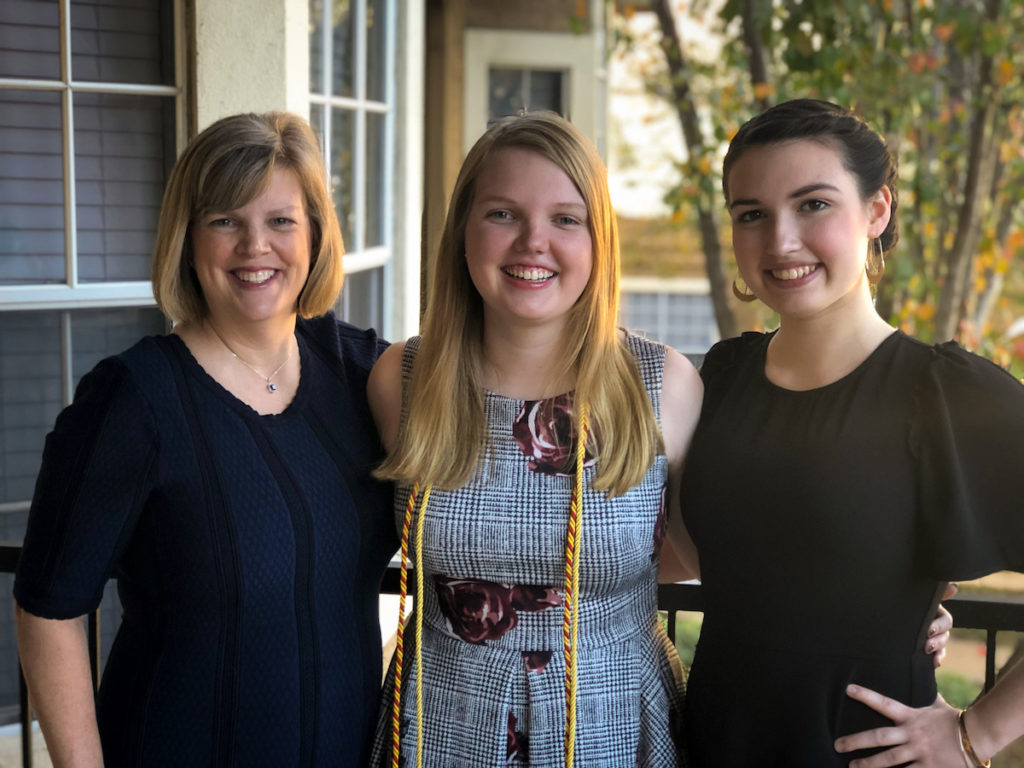
Ann, Katie and Ashley Stone
“My mom taught me a lot about empathy and kindness.” Our intern, Katie Stone learned a lot about compassion from her mother, who is a stay-at-home mom.
“She taught me those soft skills that you aren’t going to learn in a classroom,” Katie said.
She Inspired Me to Ensure Everyone Has a Voice
Jenna Jordan’s mother is a teacher who emphasized the importance of recognizing and ensuring that everyone has a voice.
“We as a collective population are always learning and on the course of gathering knowledge,” shared Jenna. “My mother works with kiddos, so understanding empathy and different perspectives has always been a constant in my life!”
As for me, growing up, my sister and I referred to our mother simply as “the boss.” We didn’t know exactly what she did, we just knew that she was powerful and that she made her own path.
My mother taught me that when it comes to your career, you always have a choice. Whether you wish to work in a highly corporate career wearing power suits, like she did in Atlanta in the ‘90s, or you want to start your own landscape design career, like she did in Connecticut in the ‘00s, the choice is yours to make.
This has inspired me deeply. Now, I know that whether I want to work for someone else, myself or something in between, that choice is mine.
A few years ago, I made a conscious decision to stop saying, “you guys.” For someone who spent an equal amount of their childhood in both the north and the south, this decision carried some weight. Moving to Connecticut in middle school is an easy way to remove “y’all” from your vocabulary. In an effort to conform, “you guys” became my norm.
Lucky for all of us, with age comes confidence. As I found my place as a woman in the workplace, I became dedicated to gender equality, working to promote inclusion. “You guys” didn’t stand a chance.
The reason is simple: the phase is exclusionary.
In our society, we use language to emphasize pre-established situations. And we can use language to change them. Ultimately, this is the power in marketing and PR, which allows us to use language to impact people’s perception of the world. It’s no surprise that, as a marketer, I became hung up on just a couple of words.
Changing my vocabulary wasn’t easy. But after a few years, the phrase is (mostly) gone. The next step is to help others change their language too. Why? Because the state of women in the workforce is not changing, and we can use language to change that.
The State of Women in the Workforce Is Unchanging
The Women in the Workplace 2018 report by LeanIn.org and McKinsey found that “Companies report that they are highly committed to gender diversity. But that commitment has not translated into meaningful progress…Progress isn’t just slow. It’s stalled.” This is despite the fact that women are doing their part, obtaining bachelor’s degrees at a rate higher than men and asking for promotions and negotiating salaries at the same rate as men.
LeanIn.org and McKinsey seek to make improving diversity easy by providing six actions companies can take to find success. One of these is particularly relevant for our industry: foster an inclusive and respectful culture.
Language is a simple way to promote an inclusive culture. If you’re looking to change your own actions at work, be considerate about the language you use. Select words and phrases that are more inclusive. Because language is so ingrained in us, making an effort to be more inclusive will take some work, but if you take a collaborative attitude and give yourself the grace to make a slip up, your language will begin to improve.
How to Ask Others to Change Their Language
Once you’ve begun the process of changing your own language (it will be a process), you can begin to help others change theirs. Through trial and error, I have developed some personal best practices when it comes to asking others to change their language. (Interestingly, the strategy I use is similar to one I use at work to advocate for a project or cause I believe in.)
Share a personal story. Sharing personal stories at work requires a balance—we don’t want to get too personal—but by sharing how we view the world, we can help others see situations through our eyes.
Share the research. Do your research to understand why what your advocating for is important.
Suggest a next step. Once your audience is bought in to your idea, they’re ready to take the next step. Share a suggestion for how to move forward.
Be supportive. Changing ingrained habits is hard! Give people the benefit of the doubt and be there to help them with a supportive, cheerful attitude when (not if) they slip up.
I found success with this approach at a previous job. One of my colleagues came to work anxious after reading an article arguing against the use of “you guys” and feeling concerned about how his use of that phrase may have impacted those around them. I was glad he felt comfortable talking about this with me, and I used the opportunity to share my story of changing my language, provided research into why it was important to do so, suggested some alternative phrases he could use and cheered him on as he practiced shifting his language.
Steps You Can Take to Promote an Inclusive Workplace
If you’re ready to take it even further, some great resources exist!
She+ Geeks Out’s blog post on covering and passing in the workplace provides some great tips for supporting our colleagues so they feel comfortable being themselves at work.
A couple of my favorites (that helped inspire this blog post)…
“Be explicit in your language. If someone says something discriminatory, say something to make it clear that that language isn’t tolerated.
Share your own story of difference.”
In addition to making our workplaces more inclusive, it is also important to set up practices that promote inclusive hiring. Another post by She+ Geeks Out has some great tips for mitigating bias in hiring. Writers like me will be interested in this tip, “If you’re struggling to get candidates to respond to your job posting, you may want to start with your job description.” Inclusive descriptions that remove adjectives typically associated with one gender (example: ‘driven’ = masculine, ‘dependable’ = feminine), go a long way to encourage a variety of candidates.
Take Your Changes in Stride as You Promote Language Equality
As you make an effort to change your actions and support women’s equality this month, give yourself grace. Changing habits is hard. But remember, I’m here to cheer you on as you make strides. Just get in touch.
Please allow me to re-introduce myself. My name is Kirsty. That’s like thirsty, but with a K.
I’m thrilled to be back at Ketner Group. KG has always been full of the kindest, cleverest, most fun people I know. How could I not want to be part of a team like that?
Over the years, I’ve worked with Ketner in a variety of ways. I began as a client, finding KG to be an extension of our team at Digby. When I moved to Nashville, I joined Ketner Group as an Account Manager, while simultaneously providing marketing services to small businesses through my company Seamless Marketing. Now, after a detour working with Rustici Software to help rebrand their company and re-launch their websites, I’m back at Ketner Group!
But okay, okay, enough about business.
Making Things, Writing Things and Cooking Things!
If there’s one thing to know about me, it’s this: I love to make things.
I studied film and electronic arts at Bard College, the culmination of many years practicing visual arts, theatre and music throughout my childhood years. At Bard, I learned how to create installation art pieces and began the process of learning how to write and think, two things I plan to learn more about as I age.
I love to cook. I’ve had the fortune to learn how to cook from two fabulous self-taught cooks: my mother and my dear friend and cookbook author, Pam Anderson. These women have taught me that food is a way to show your love, express your creativity and create the fuel of a very good party.
Outside of that, I’m an avid reader and will consume pretty much anything you put in my hand. I can’t not finish a book. And I love yoga. I’ve been practicing for more than fifteen years. I use yoga as a tool to learn more about myself and give myself an excuse to dance.
In Nashville, I’ve found that there are two types of people: those who are born here and those who arrive here by accident, but then never leave. My husband is the former, I am the latter. I don’t plan on leaving anytime soon, particularly since we’ve set ourselves up in a pretty cozy fashion. We bought our first house two years ago and are about to celebrate the third birthday of our very nice dog Charlie (or Chuck, Cha-Cha, Chewie or Chicken for short).
All of this is to say that I’m very happy. And I am very excited for this next big adventure.







 Austin